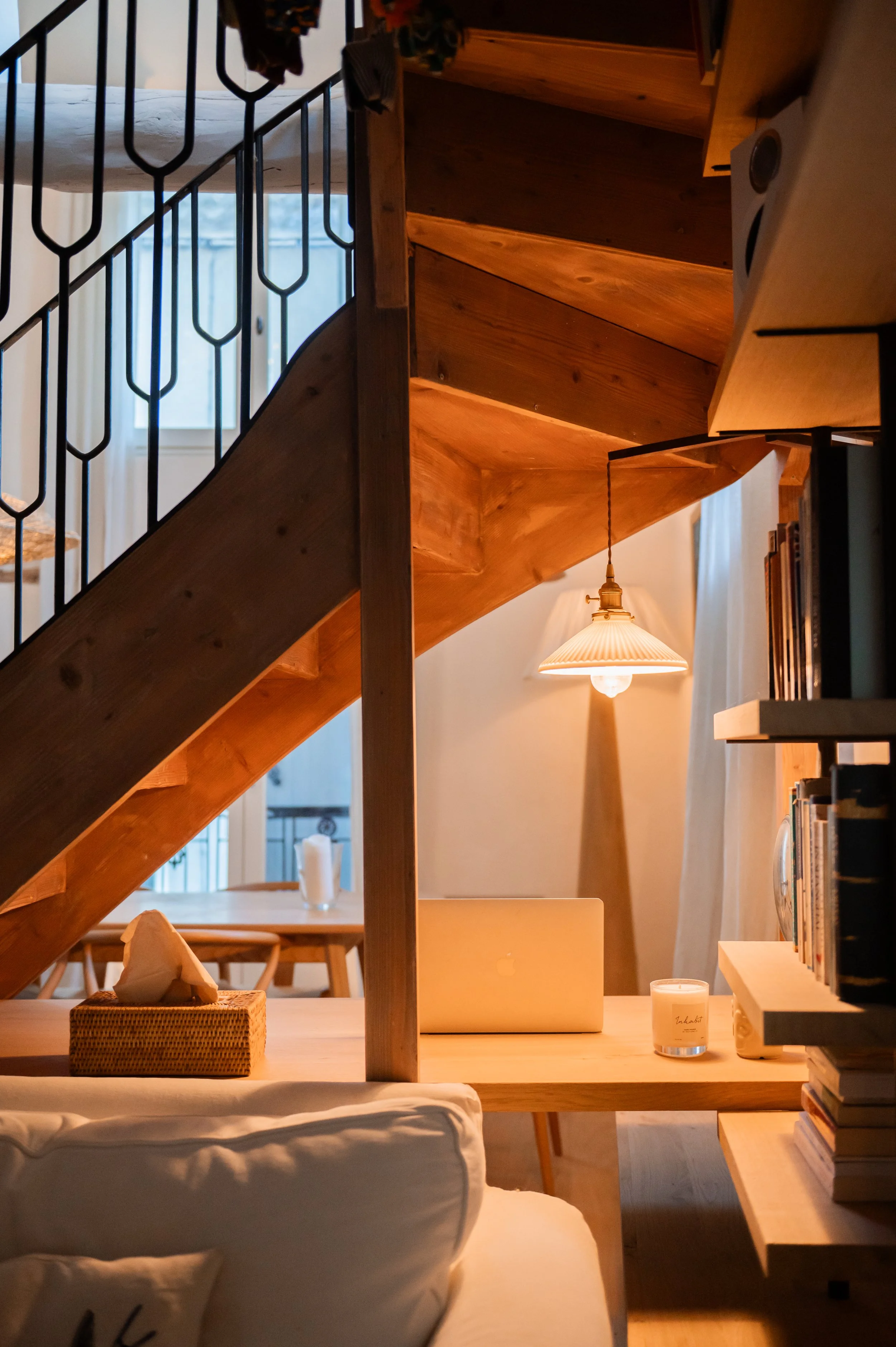
Why Use A Lighting Designer?
Lighting As a Fundamental Design Element
Lighting is often treated as a secondary consideration, introduced late and resolved through a standard arrangement of fittings.
In reality, it is the third critical dimension alongside architecture and landscape or interior design, enhancing the features of a space to create impact, atmosphere and functionality.
Creative and Technical Value
Lighting design should add value both creatively and technically. By placing light fittings strategically so that details and textures are accentuated, and using a well thought out control system, lighting schemes are not only visually appealing but service the space as required.
Rather than positioning lights in a simple grid layout across a ceiling, a designer implements a layered approach. Layered lighting combines multiple positions, fittings and techniques, carefully divided between circuits to optimise flexibility and practicality.
What a Lighting Designer Does
A lighting designer highlights the important features within a space, suggesting which elements require illumination and how that might be achieved. From uplighting architectural features to backlighting joinery or defining task areas, a designer brings together both aesthetic and technical decisions to create a cohesive outcome.
Once a scheme has been developed, a designer will specify the appropriate fittings and remain involved throughout the installation process, ensuring the design is carried through as intended.
Budget & Efficiency
Thoughtful lighting design can be far more cost effective than a standard grid-like approach. By placing fittings only where they are truly needed and organising them across well considered circuits, energy use is optimised and unnecessary expenditure on fixtures is avoided.